Showing posts with label mask. Show all posts

Tuesday, June 18, 2013

Enenra - Dūmų Demonas

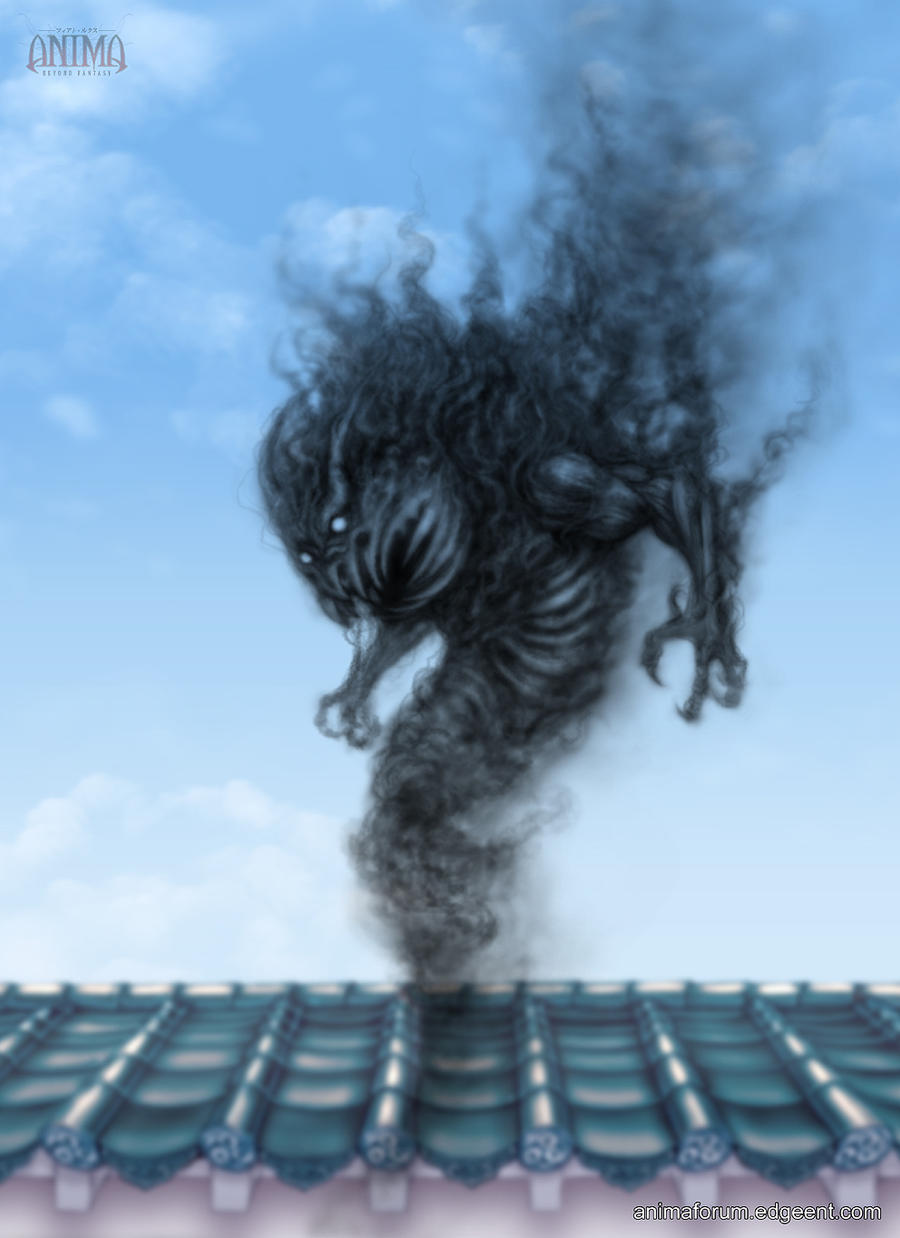
Enenra - "išaustas iš dūmų", išblėsusio laužo dūmų demonas. Virtuvės ar pirties dūmų dvasia. Paprastai turi žmogišką formą.

An Enenra (煙々羅 en'enra?, lit. "lightweight-fabric smoke") is a yōkai, or Japanese monster, that is composed of smokeIt resides in bonfires and, when it emerges, it takes the form of a human. It is said that an enenra can only be seen by the pure of heart.
The character 羅 in the enenra's name is meant to draw a comparison between the enenra and the lofty characteristics of lightweight cloth.
In the 2011 video game Mortal Kombat, it is revealed that the character Smoke (who makes his first human appearance in the game in almost two decades) is an Enenra. As a child he was burned for sacrifice and survived in the form of Smoke Demon.

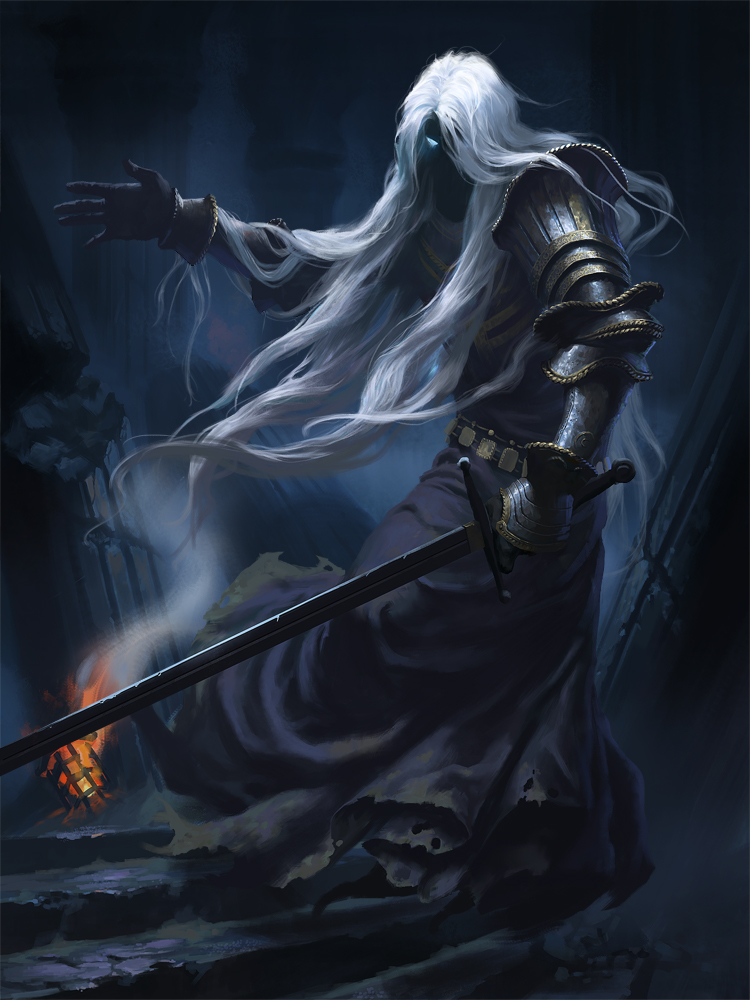

Manau šis personažas gal net geriau tiktų kaip dar vienas backgroundo akcetas. Nupaišysime kur nors iš už namo kampo vinguruojantį vaiduoklišką dūmą:



Friday, June 7, 2013

Byakko - Baltasis Tigras

Baltasis Tigras Byakko yra labai gražus personažas. Stiprus ir romantiškas vienu metu. Gražuolis baltais plaukais. Populiarus anime filmų ir mangų veikėjas. 

Čia tikrai neišvardinsiu visos Byakko inonografijos, bet paveikslėlių įdėsiu daug. Grožėkitės.


The White Tiger is one of the Four Symbols of the Chinese constellations. It is sometimes called the White Tiger of the West (西方白虎, Xī Fāng Bái Hǔ), and is known as Baihu in ChineseByakko in JapaneseBaekho in Korean and Bạch Hổ in Vietnamese. It represents the west and the autumn season.


During the Han Dynasty, people believed the tiger to be the king of all beasts. According to legend the tiger's tail would turn into white when it reached the age of 500 years. In this way, the white tiger became a kind of mythological creature. It was said that the white tiger would only appear when the emperor ruled with absolute virtue, or if there was peace throughout the world. Because the color white of the Chinese five elements also represents the west, the white tiger thus became a mythological guardian of the west.


Byakko, the White Tiger of the West. You represent the planet Venus, the season Autmn, the elements Metal and Wind, the gem, Diamond, and the body parts lungs and small intestine. Your main Celestial Warrior is Tatara. The White Tiger of the West, for instance, is associated with metal. When, therefore, metal is placed in a grave, a ceremonial connection with the tiger-god is effected. 'According to the Annals of Wu and Yueh, three days after the burial of the king, the essence of the element metal assumed the shape of a white tiger and crouched down on the top of the grave.' Here the tiger is a protector a preserver. ...As we have seen, white jade was used when the Tiger god of the West was worshipped; it is known as 'tiger jade'; a tiger was depicted on the jade symbol. To the Chinese the tiger was the king of all animals and 'lord of the mountains', and the tiger-jade ornament was specially reserved for commanders of armies. The male tiger was, among other things, the god of war, and in this capacity it not only assisted the armies of the emperors, but also fought the demons that threatened the dead in their graves.


Thursday, June 6, 2013

Bakeneko - katinas monstras

Populiarus personažas. Ir nebūtinai blogas. Letenėle mojanti katytė neša laimę ir turtus.

Bakeneko (化け猫?, "monster-cat"), in Japanese folklore, refers to cat yōkai (spiritual beings) with supernatural abilities akin to those of the kitsune (fox) or tanuki (raccoon dog). There are a number of superstitions that detail how ordinary cat may transform into a bakeneko. Bakeneko then haunt and menace their household.
bakeneko with a forked tail is referred to as a nekomata (猫又?, or 猫股 "forked-cat"). The popular good luck totem, the Maneki Neko(招き猫?, "Beckoning Cat") found in shop fronts, is also a type of bakeneko.

According to Japanese folklore, a cat may become a bakeneko by meeting any of the following three conditions:[1]
  • living over 10 years of age
  • reaching one kan (3.75 kg or 8.25 lbs) in weight
  • growing its tail too long, which, according to myth, may fork into two. This particular kind of bakeneko is referred to as a nekomata.
The latter superstition about tail-length possibly led some Japanese people to cut the tails off of cats to prevent their transformation into bakeneko. It may also have some connection to the breeding of short-tailed breeds like the Japanese Bobtail.
Once transformed, bakeneko gain a range of paranormal powers used to haunt the household they live in. These powers include:
They may use their shapeshifting powers to live a life as a human would normally, sometimes by taking the place of a member of the household after killing and consuming them in their sleep. They may take the form of a person they intend to kill or harm. Other stories tell about how a bakeneko may sometimes shapeshift into a beautiful girl, so that their owner would be able to marry them and have children.[citation needed]
Bakeneko also have the ability to eat anything in their way, regardless of size or edibility, including humans. Their main food is poison, particularly from a certain snake unknown to humankind.
Not all bakeneko are bad; in some stories they are faithful and good-hearted to their owners. Three stories in particular tie benevolent bakeneko to the legend of the famous maneki neko.
One such story is about a bakeneko named Tama. Tama's owner was a very poor priest who lived in a rundown temple in Setagaya, west of Tokyo. The priest would tell Tama, "I'm keeping you in spite of my poverty, so couldn't you do something for this temple?" One day the daimyo of the Hikone district, Ii Naotaka, was standing under a tree to avoid the rain. Naotaka became aware of a cat beckoning him to a temple gate. As he began to walk the tree was struck by lightning[citation needed]. Afterwards, Naotaka became friends with the temple priest, and donated lots of money to have the run-down temple rebuilt. When Tama died, the priest built a grave for the cat; eventually, a shrine was built within the temple grounds dedicated to the "beckoning cat". Gotokuji temple still stands today; the nearby Gōtokuji Station on the Odakyu Line was named after it.


Tiesiog negalima nepaminėti nuostabaus personažo Kusuriuri iš 


Baku - košmarų rijikas

Sapnų ir košmarų rijikas Baku. Paprastai vaizduojamas kaip visai mielas gyvūnėlis ilgu ilgu snukiu (ar straubliu?) Jo atvaizdais dažnai puošiamos rūmų ar šventyklų kolonos, laikančios stogo kraigą.

Pagalvojau, jog galima būtų sukurti kepurę (ne veidą dengiančią kaukę, o kepurę) su ilgu ilgu snapeliu, kurį dekoruoti kaip šito rijiko nasrus. Lėlę aprengti ryškiu spalvotu kimono, išpuošti visaip - va jums ir Baku!

Baku (獏 or 貘?) are Japanese supernatural beings that devour dreams and nightmares. They have a long history in Japanese folklore and art, and more recently have appeared in Japanese anime and manga (see examples cited below).
The traditional Japanese nightmare-devouring baku originates in Chinese folklore and was familiar in Japan as early as the Muromachi period (14th-15th century).[2] Hori Tadao has described the dream-eating abilities attributed to the traditional baku and relates them to other preventatives against nightmare such as amuletsKaii-Yōkai Denshō Database, citing a 1957 paper, and Mizuki also describe the dream-devouring capacities of the traditional baku.[3]
An early 17th-century Japanese manuscript, the Sankai Ibutsu (山海異物), describes the baku as a shy, Chinese mythical chimera with an elephant’s trunk, rhinoceros eyes, an oxtail, and tiger paws, which protected against pestilence and evil, although eating nightmares was not included among its abilities.[1] However, in a 1791 Japanese wood-block illustration, a specifically dream-destroying baku is depicted with an elephant’s head, tusks, and trunk, with horns and tiger’s claws.[4] The elephant’s head, trunk, and tusks are characteristic of baku portrayed in classical era (pre-Meiji) Japanese wood-block prints (see illustration) and in shrine, temple, and netsuke carvings.[5][6][7][8] Writing in the Meiji era, Lafcadio Hearn (1902) described a baku with very similar attributes that was also able to devour nightmares.


Sunday, June 2, 2013

Namahage - demonas baudėjas

Idėja kostiumui arba kaukei.

Namahage - ritualinis baudžiantis demonas.
Kiti to paties veikėjo vardai - Amahage, Amamehagi, Appossha, Amaburakosagi, Akamata-Kuromata(ja), Suneka, Toshidon(ja), Yamahage, Nagomehagi.

Namahage (生剥?)[1] a ritual-disciplinary demonin traditional Japanese folklore is a demonlike being, portrayed by men wearing oversized ogre masks and traditional straw capes (mino(ja)) during a New Year's ritual.
The frightfully dressed men, armed with deba knives (albeit wooden fakes[3] or made of papier-mâché) and toting a teoke (手桶"hand pail" made of wood?),[2] marching in pairs or threes going door-to-door making rounds of peoples' homes, admonishing children who may be guilty of laziness or bad behavior,[2] yelling phrases like "Are there any crybabies around?" (泣く子はいねがぁnakugo wa inēgā??)[5] or "Are naughty kids around?" (悪い子はいねえか waruigo wa inēka??) in the pronunciation and accent of the local dialect.
The namahage visits are nowadays practiced on New Year's Eve[6] (using the Western calendar). But it used to be practiced on the so-called "Little New Year" (小正月Koshōgatsu?),[3] the first full moon night of the year. This is 15th day of the first lunar calendrical year, which is not the same thing as January 15[7] as it usually falls around mid-February, exactly two weeks after the Chinese New Year (JapaneseKyūshogatsu).

A legend has developed regarding the origins of namahage, that Emperor Wu of Han (d. 87 BC) from China came to Japan bringing five demonic ogres to the Oga area, and the ogres established quarters in the two local high peaks, Honzan (本山?) and Shinzan (真山?). These oni, as they are most commonly called in Japan, stole crops and young women from Oga's villages.[6][11]
The citizens of Oga wagered the demons that if they could build a flight of stone steps, one thousand steps in all, from the village to the five shrine halls[5] (variant: from the sea shore to the top of Mt. Shinzan[11]) all in one night, then the villagers will supply them with a young woman every year.[11] But if they failed the task they would have to leave. But just as the ogres were about to complete the work, a villager mimicked the cry of a rooster, and the ogres departed, believing they had failed.


Saturday, June 1, 2013

Tsukumogami - įvairiausių daiktų dvasios

Tsukumogami - "daiktų dievai"  - žinomi Japonijos folklore nuo 10 amžiaus. Buvo tikima, kad namų apyvokos daiktai, visokie rakandai, įrankiai, dėžutės, muzikos instrumentai, atitarnavę žmogaus namuose 100 metų , įgyja sielą. Tuomet jie pradeda judėti, kalbėti ir gyventi kaip žmonės. Netgi meldžiasi Dievams.

Paprastai Tsukumogami išlieka draugiški ir lojalūs namų šeimininkams, bet gali ir supykti. Nuskriausti ir įskaudinti daiktai organizuojasi į gaujas ir krečia išdaigas tiems, kas negražiai su jais elgėsi ar išmetė lauk. Kad išvengti galimo daiktų keršto, iki šių dienų Shinto šventyklose atliekamos tam tikros apeigos, kurių metu stengiamąsi nuraminti senus sulaužytus daiktus.

A type of Japanese yōkai, the Tsukumogami (付喪神 “Kami of tool”) was a concept popular in Japanese folklore as far back as the tenth century, used in the spread of Shingon Buddhism. Today, the term is generally understood to be applied to virtually any object, “that has reached their 100th birthday and thus become alive and self-aware, though this definition is not without its controversy.

Tsukumogami are animate household objects. An otogizōshi (“companion tale”) titled Tsukumogami ki (“Record of tool kami”; Muromachi period) explains that after a service life of nearly one hundred years, utsuwamono or kibutsu (containers, tools, and instruments) receive souls. While many references are made to this work as a major source for the definition of tsukumogami, insufficient attention has been paid to the actual text of Tsukumogami ki.


Known Tsukumogami